
The Music Industry Isn't What You Think It Is
How Universal, Sony, and Warner Dominate More Than Music

Last year, I wrote about the “Big Three” and their unmatched control over the music industry. At the time, I covered the basics: Who they are, what they own, and why their dominance matters.
As I revisited this piece, I realized it didn't convey what God had placed on my heart. The context, the history, and the sequence of events that shaped their rise deserved more attention.
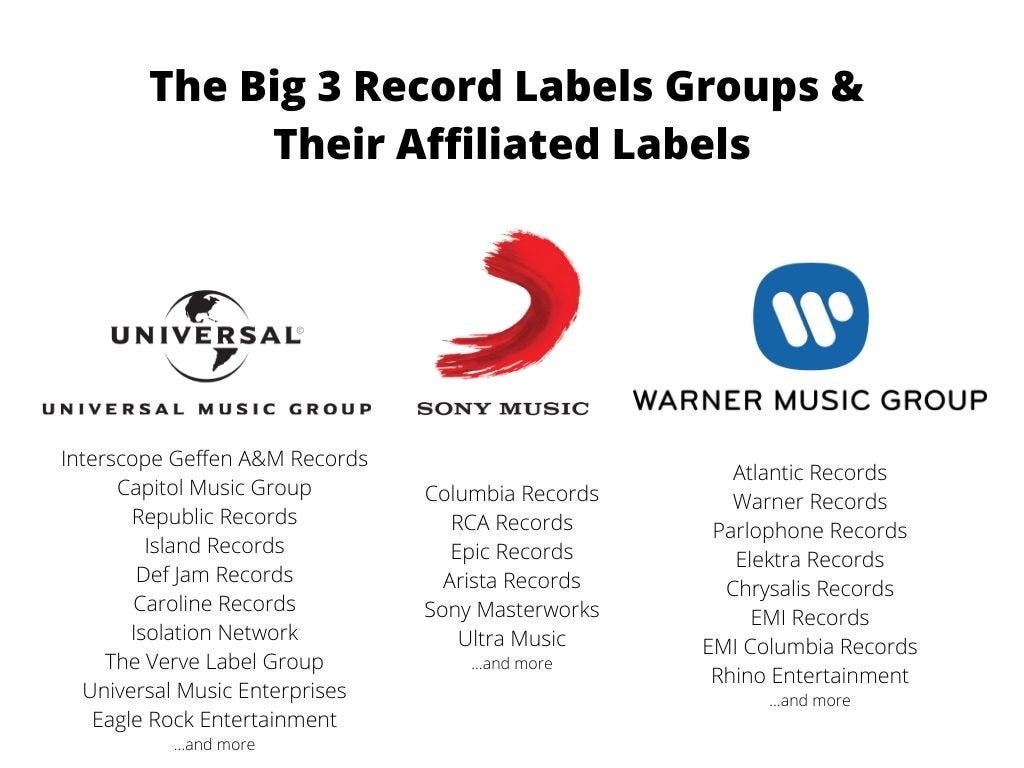
This is the expanded version, where we'll explore how the music industry went from a diverse landscape of labels and independent voices to being dominated by three global conglomerates1.
The “Big Three” is far more than knowing who controls the catalogs, distribution, and licensing; it's about understanding why the structure exists. The economic, technological, and cultural pressures made it inevitable.
It All Starts With The Digital Collapse
Right before the turn of the millennium, the music industry faced a major crisis. The growth of peer-to-peer platforms such as Napster, Zazaa, and LimeWire enabled millions of people to access music for free. This bypassed the traditional sales channel entirely!
Songs could now travel across the world in seconds without a single dollar being spent. For major labels that had built their business on selling physical media, this was incredibly catastrophic.
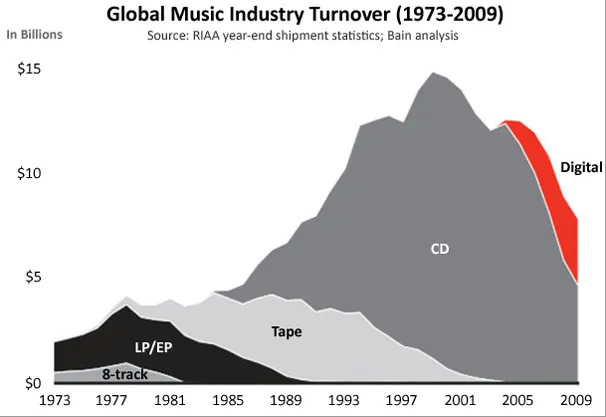
Napster alone reached an estimated 1.5 million simultaneously sharing songs at its peak in 2001. The sheer volume of illegal downloads represented revenue that the labels could never reclaim. Smaller independent labels struggled to stay afloat, lacking the financial reserves of the major companies. Many folded under the pressure, unable to compete in this new digital reality.
Physical sales, particularly CDs, began to collapse. Global recorded‑music revenues dropped from about US$23.8 billion in 1999 to roughly US$14.3 billion in 2014; a decline of 40%.
The Digital Millennium Act
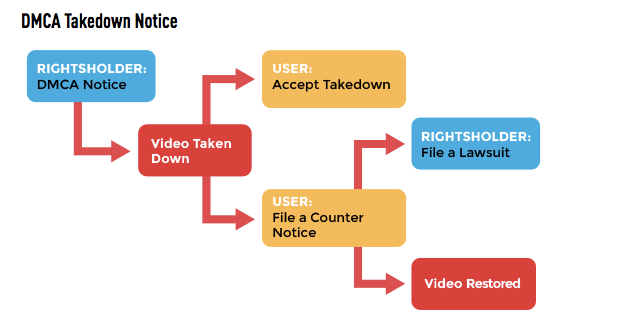
The Digital Millennium Copyright Act (DMCA, 1998) was intended to give the labels tools to combat piracy. It provided a framework for takedown notices and gave copyright holders legal grounds to pursue infringers.
Regardless, it was largely reactive. Lawsuits against Napster and similar platforms only achieved temporary victories, and by the time the courts intervened, the culture of free digital music was already entrenched. Enforcement alone could not restore lost revenue.
The digital collapse had broader consequences than just lost sales. It shifted the risk profile of the music industry: investing in new artists became far riskier, and labels began to prioritize acts that could guarantee large streams, tours, and global recognition.
Meanwhile, catalog ownership, older recordings, and publishing rights became more valuable than ever. Companies that owned extensive catalogs could monetize them repeatedly through licensing, streaming, and synchronization, insulating themselves from the volatility of new releases.
Consolidation
Mergers and acquisitions were no longer optional; they were survival strategies. Companies needed scale to maintain infrastructure, global distribution, and marketing power. By combining catalogs and resources, major labels could weather the financial shocks that had devastated smaller competitors.
The digital collapse was a perfect storm: rampant piracy, declining physical sales, and the failure of existing legal frameworks to protect revenue forced the industry into a new era.
The Big Three that dominate today (Universal, Sony, and Warner) emerged not solely through ambition, but because survival required unheard-of consolidation. Understanding this context is crucial for grasping why a handful of companies control so much of the music we hear worldwide.
So Who Acquired Who?
It didn’t happen peacefully. This goes far beyond the music industry, and I'll show you what I mean. They absorbed nearly EVERYTHING around them.
Now, it’s going to get slightly technical for a minute. I’m going to throw around a lot of numbers, names, and dates, but they are CRITICAL to the context.
I also need to explain that every major label company has a publishing arm (or owns one) because music has two separate copyrights:
The master recording (owned by the label)
The composition (lyrics/melody, owned by the publisher)
By owning publishing, labels gain control over both revenue streams: Licensing the recording (master) and the song (composition). This allows them to collect more royalties, secure sync deals (TV/film), and manage publishing administration, maximizing profits from the same song across multiple uses.
So let’s break down what we now know as “The Big Three.”
Universal Music Group (UMG)
It starts with the parent company, Seagram's. You read that right, the alcohol company was UMG’s parent company. In 1995, the CEO sold the company’s 24% stake in DuPont, a major source of revenue.
The goal was to use the proceeds from the sale to diversify Seagram from primarily liquor sales and distribution to become a media and entertainment powerhouse by buying the Music Corporation of America (MCA).
In 1998, Seagram’s purchased PolyGram for $10.4 billion. In 1998, MCA Music Entertainment and PolyGram merged to form UMG. This acquisition created one of the biggest catalogs on Earth. UMG became the world’s largest music company by buying its old rivals piece by piece.
This is where history takes a turn. Seagram's, along with UMG, was sold to French media conglomerate Vivendi in 2000, but as part of the merger, Seagram’s had to be sold to consolidate debt. Now, Seagram’s is out of the picture, and our eyes are on Vivendi.
UMG then purchased Bertelsmann Music Group (BMG) Music Publishing in 2006 for $2 billion, making it the largest music-publishing deal in history. It's interesting to note that Universal was among several record companies that filed lawsuits against Bertelsmann for its financial support of Napster, which was shut down by a court injunction in 2001, and went bankrupt by 2002.
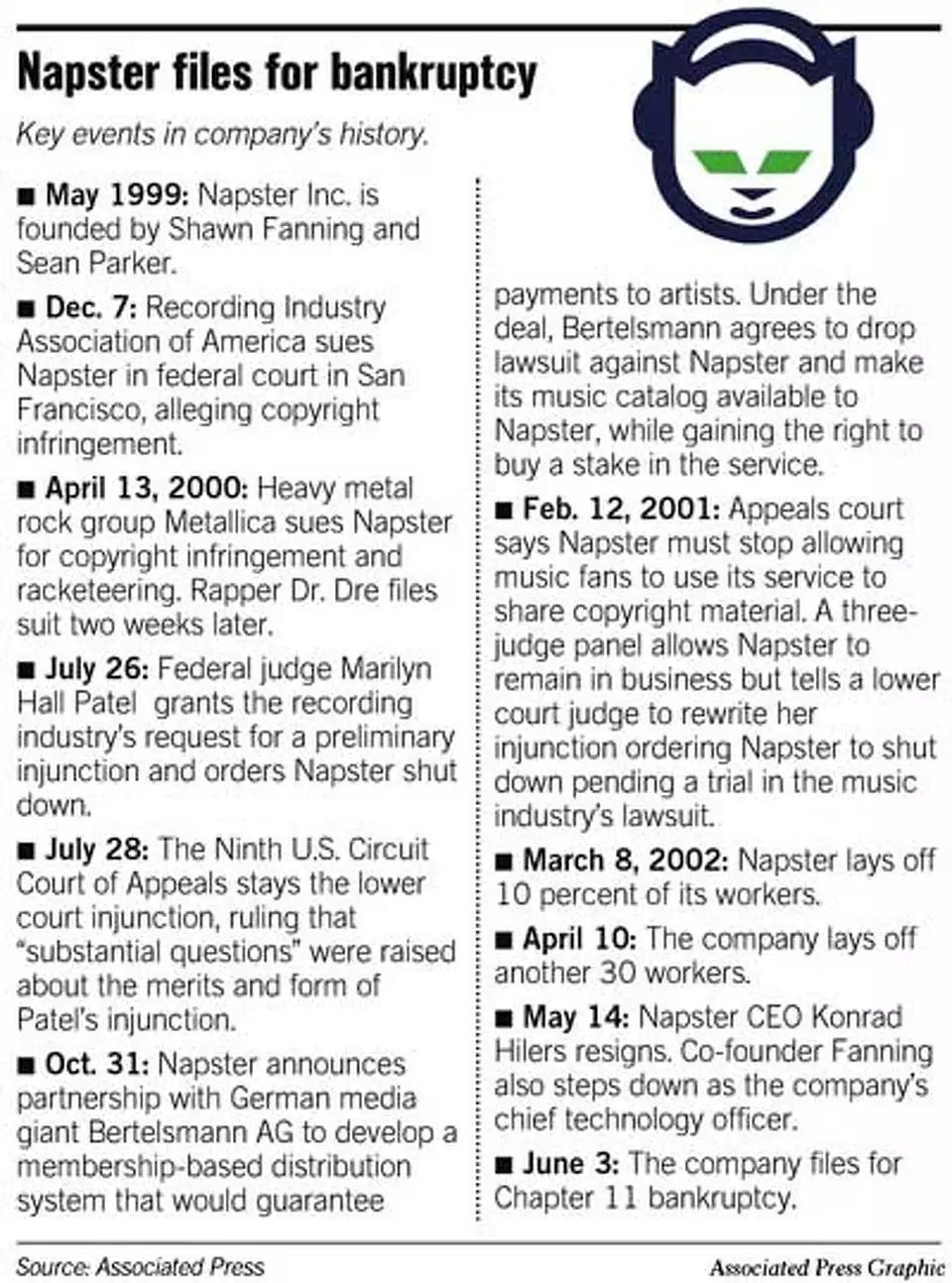
Remember, Napster is the same company that enabled millions of people to access music for free. To them, this is payback.
In 2011, Lucian Grainge became UMG’s CEO and shifted the company further toward global expansion and music streaming. A year before, UMG partnered with Spotify, marking the “streaming era.”
From 2000 to 2020, Vivendi owned 100% of UMG. In March of that year, investors led by Chinese technology and media holding company Tencent (Snapchat, Epic Games (Fortnite), Discord) acquired a 10% stake of UMG, followed by another 10% the following year.
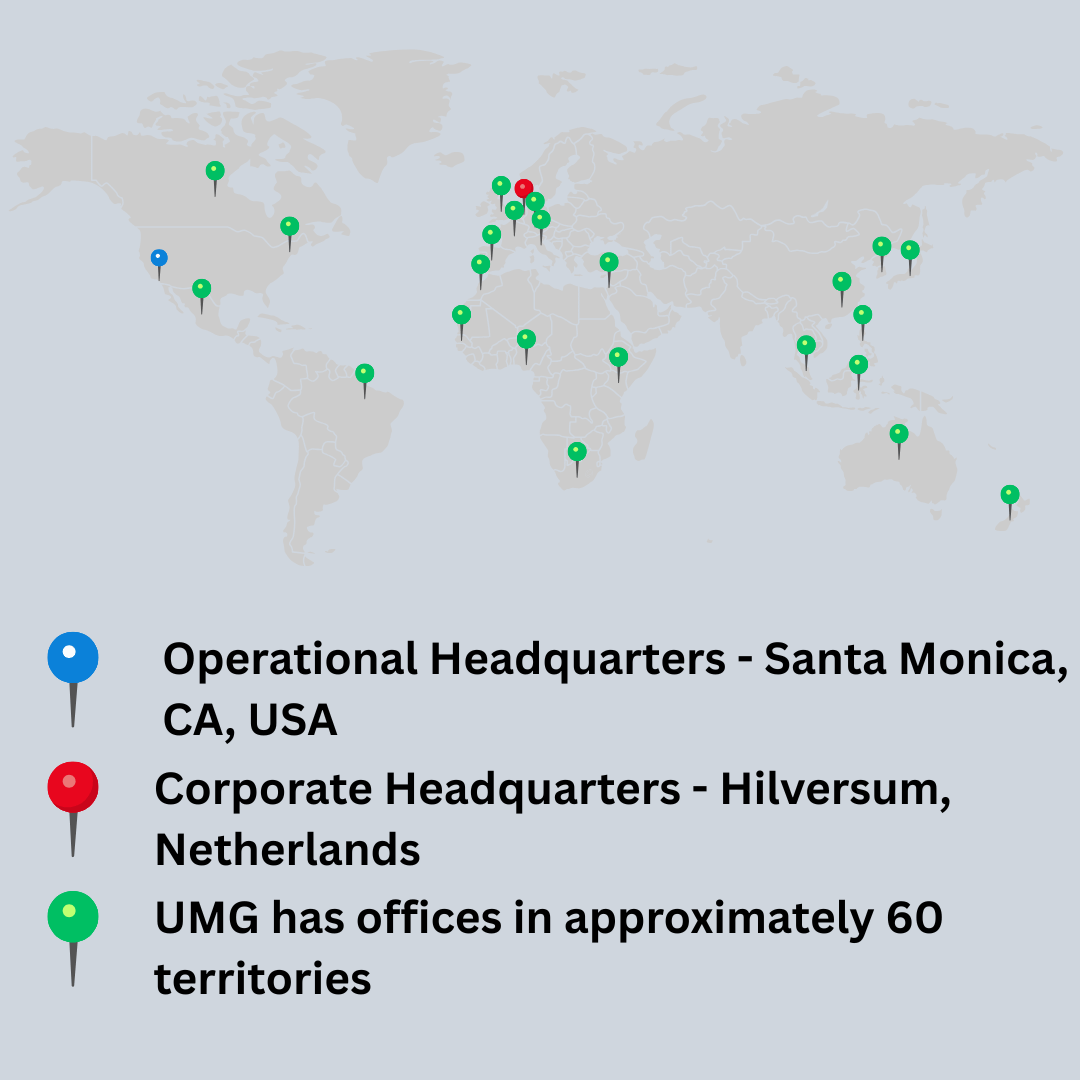
Keep in mind that since MCA was an American-based company, UMG is operationally headquartered in California. It’s a lot, like I said, so I made a map to show you the UMG reach :)
Sony Music Entertainment (SME)
Sony entered the music world through technology. In the 1950s and 1960s, it focused on building hardware: tape recorders, cassette players, CD technologies, and eventually the Walkman. These inventions shaped how people consumed music. As Sony built the devices, it also began positioning itself to control content.
During this period, Sony did not own a major record label. Yet, it partnered with international labels for distribution and licensing. These early moves set the foundation for the company’s later expansion.

Sony’s first major leap into the label world came in 1988, when it purchased CBS Records, one of the largest and most influential music labels at the time. CBS Records included Columbia Records, Epic Records, and a massive catalog of world-class artists.
They renamed the division “Sony Music Entertainment.” This was the moment when Sony officially became a full-scale music company, not just an electronics manufacturer.
Throughout the 1990s, Sony Music continued expanding. It invested heavily in international offices, new artists, and soundtrack divisions. And because Sony owned both the hardware and the content, it was uniquely positioned to benefit from CDs, which became the decade’s dominant format.
Let’s fast-forward to 2004, when Sony merged its label division with Bertelsmann Music Group (BMG), to create Sony BMG Music Entertainment. Yes, this is the same BMG involved with UMG in 2006. However, I must note that this is an entirely separate entity from BMG Publishing, but the same parent company.
BMG’s 50% stake was sold to Sony four years later, returning the name to Sony Music Entertainment. Sony and ATV Publishing, Sony’s publishing company, then acquired Electric and Musical Industries (EMI), a British multinational record label, in 2012.
Sony was very formulaic about their takeover. Every four years, they inched closer to becoming the largest music publishing company while still maintaining a tight grip on the technology driving the music industry.
Chess.
Warner Music Group (WMG)
Warner’s story is different from Universal and Sony. While the others expanded through massive global acquisitions, Warner came into the music industry almost by accident. Then spent decades transforming itself into one of the world’s most strategic power players.
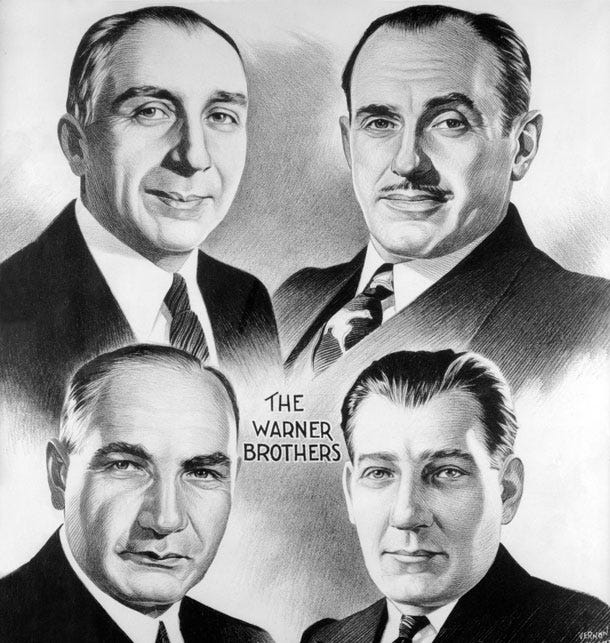
Warner Bros. was originally a film company, not a music company. Their entry into the music world came in the late 1950s, when actor Tab Hunter had a hit song on a different label. Warner realized something important:
If they kept making movies with actors who recorded music for outside labels… the money was leaking out.
So in 1958, they created Warner Bros. Records to keep profits in-house. What began as a defensive business move soon became the foundation of a global empire.
Warner quickly started acquiring labels to grow its catalog:
1963 - Reprise Records (originally founded by Frank Sinatra)
1967 - Atlantic Records (home to soul, R&B, and rock legends)
1970s - Elektra Records and related imprints
These labels didn’t just add music; they added culture. Warner became known for letting artists experiment and for giving labels freedom to operate creatively. In an era where many companies were rigid, Warner became “the artist-friendly major.”
Through the 1970s and 1980s, Warner’s music division grew under the Warner Communications umbrella, which later merged with Time Inc. to form Time Warner in 1990: this merger combined film, TV, cable, magazines, and music.
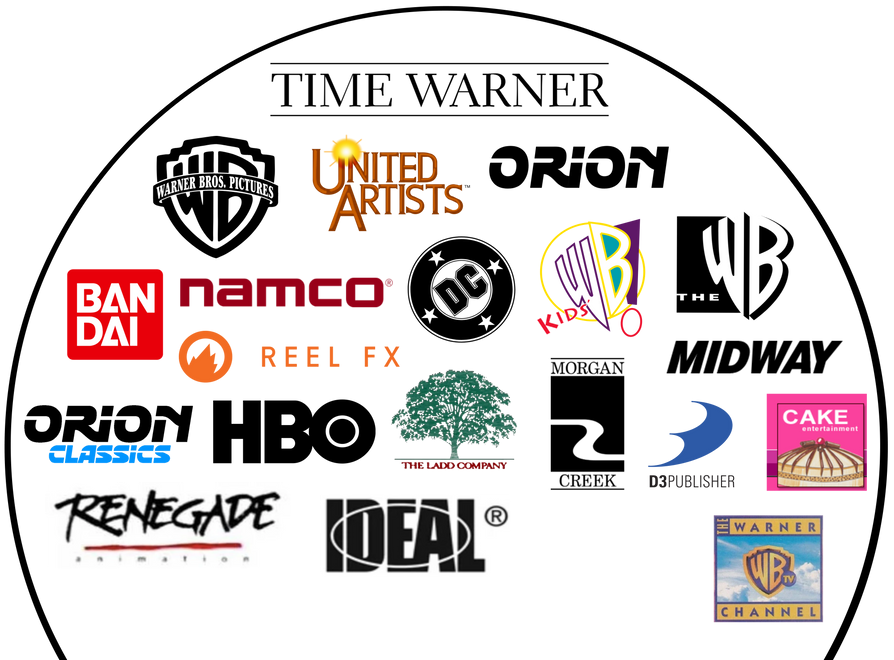
It created one of the most powerful media conglomerates on Earth. The music division was just one piece of a much larger puzzle. Warner was no longer a “record label”; it was an interconnected media machine. The real turning point came in 2004.
Time Warner decided to sell the entire music division to a group of private-equity investors led by Edgar Bronfman Jr. Yes, the same Bronfman family that once owned Seagram’s, which later controlled UMG. This industry is a rabbit hole that goes deep.
For the first time, Warner Music Group became fully independent, no longer tied to a film studio or media conglomerate. This move forced Warner to operate differently from its rivals:
No deep corporate pockets
No cross-media empire to fall back on
No large tech division or parent company
They had to survive on music alone. Surprisingly, this became one of their greatest strengths. While many labels resisted digital distribution, Warner was one of the first major companies to embrace streaming and subscription models. They were early partners with YouTube, Spotify, and Apple Music
Warner became the first major label to sign licensing deals with several streaming platforms, even as others still saw them as threats. Their catalog (especially Atlantic and Warner Records) performed extremely well in the streaming era, and Warner avoided some of the massive debt burdens that weighed down Universal and Sony.
In 2020, Warner went public on the NASDAQ, becoming a publicly traded company once again. By then, it had transformed into a lean, digitally focused major label, owning Warner Records, Atlantic Records, Elektra, Parlophone, Warner Chappell Music (publishing)
Oh, and not to mention a massive global distribution network.
Why Does This Matter, And What Does It Have To Do With You?
It has EVERYTHING to do with you.
When you press play on a song, stream an album, watch a music video, or scroll through social media, you are interacting with a system shaped by a handful of companies. The way music is marketed, priced, recommended, promoted, censored, pushed, or hidden is not random. It is the result of decades of consolidation, legal battles, corporate strategy, and pure economic survival.
What you hear is not simply a reflection of culture. The priorities of three global conglomerates influence it.
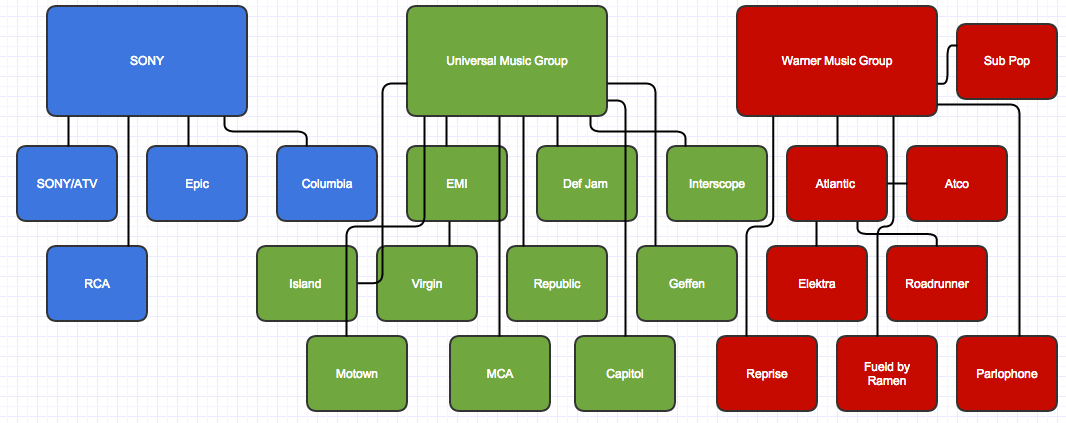
This matters because these companies do not just control music. They control access to music. They control what gets exposure and what disappears. They influence what becomes a “hit” and what dies in the vault because it is not profitable enough.
Your playlists, your favorite artists, and your entire musical environment are shaped by decisions made in boardrooms.
It goes deeper than that.
The Big Three determine what genres get mainstream investment, which artists receive global marketing, how songs are priced and licensed, what catalogs get pushed into films, ads, or TikTok trends, which issues artists can speak about without risking their careers, how streaming payouts are structured, and which platforms rise or fall.
You are affected whenever an album is delayed due to corporate disputes. You are affected when an artist fights for ownership rights and ends up re-recording their entire catalog. You are affected when the industry prioritizes viral singles over long-form creative expression.
You are living inside the ripple effects of choices made twenty, thirty, and forty years ago.
Your experience as a listener has been shaped by the digital collapse, the DMCA, the loss of physical media, the rise of streaming, mergers that absorbed dozens of labels, publishing takeovers, corporate responses to piracy, and global media consolidation.
While the average person may never read an antitrust filing or a merger approval document, they feel the consequences daily.
You feel it when every song starts sounding the same.
You feel it when your favorite artist can’t release what they want.
You feel it when streaming platforms pay so little that musicians cannot survive without touring.
You feel it when the charts no longer reflect talent, but algorithms.
You feel it when music stops feeling personal and starts feeling manufactured.
This is why history matters. This is why the structure matters. This is why the context is vital. When God put this topic on my heart last year, it was not just to trace ownership. It was to help people see the deeper picture: how the industry we consume every day came to look the way it does.
Understanding the system allows you to recognize the forces shaping the messages, the sounds, the trends, and sometimes even the values presented to you.
When only three companies control the global soundtrack, the stakes are higher than most people realize.
What you probably didn’t realize is that The Big Three have already signed licensing deals with AI music startup Klay!
It’s Time To Make A Change
When you step back and look at the mergers, acquisitions, publishing takeovers, and catalogs swallowed whole, you begin to see the truth: almost every major artist people support is tied to the Big Three in some way.
Even when it looks independent, it usually isn’t. Even when the label isn’t named Universal, Sony, or Warner, it’s often owned, distributed, or licensed through them.
That’s exactly how they designed it. A web of subsidiaries, “independent” imprint labels, distribution deals, and publishing rights. All quietly funneling money upward to the same three corporations.
That’s why this matters, because what you support, you strengthen.
If you only stream artists owned by the Big Three, if you only follow the charts they control, if you only listen to what their algorithms push… Then you’re feeding the machine that silences creativity, swallows smaller labels, and manufactures artists the same way they manufacture products.
You don’t have to. You’re not powerless in this equation.
There are thousands of real independent artists; people who create because they love music, not because a boardroom told them what sells. Artists who don’t have billion-dollar marketing behind them, but who have authenticity, originality, and God-given talent that the industry can’t replicate.
Now, with the rise of AI-generated “slop music,” the problem is only getting worse. Labels are already experimenting with AI-produced tracks because it costs nothing, it requires no creativity, it never complains, and it maximizes profit.
Cutting the humanity right out of the equation.
The Big Three don’t want artists; they want assets. They want catalogs they can stretch, remix, recycle, and repackage indefinitely.
YOU don’t have to accept that. YOU don’t have to let corporations decide the future of music, culture, or creativity.
Your choices matter. What YOU stream matters. Who YOU support matters.
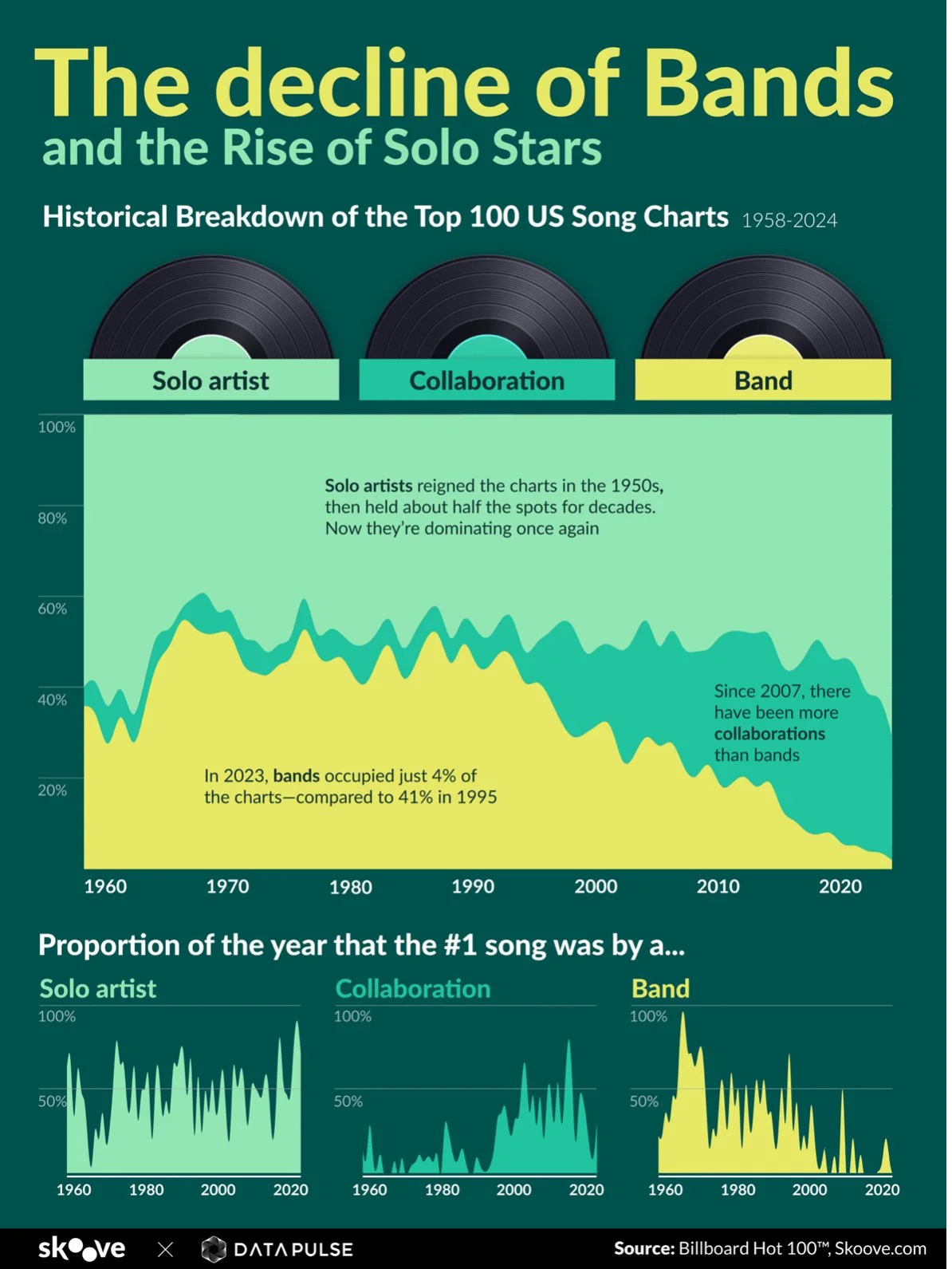
AI is already creating music that’s reaching #1 on charts, what’s next?
Every time you support an independent artist, even with a single stream, share, or follow, you’re pushing back against a system built on consolidation and control. You’re keeping creativity alive. You’re helping create a future where real voices thrive, not AI clones owned by global conglomerates.
The Big Three were built on decades of corporate power.
Though a new era can be built on millions of individual choices.
That starts with us choosing music that’s real. Artists who are free from control. Not only that, but the culture that reflects truth, creativity, and the God who gave us the gift in the first place.
So next time you’re listening to an artist, search up, “Who is ___ signed to?” Don’t stop there if you don’t see it immediately. Ask again, “Who then owns that record label?” I promise, it’s 99% The Big Three.
It’s time to make a change.
a large corporation made up of several different, often unrelated, companies or subsidiaries, operating under a single parent company, offering diverse products and services to spread risk and generate stable earnings